
AI agent cooperation From the report of
One malicious delegate, replayed incidents and the cost of compaction
- Authors’ claims
After compaction, the best model keeps only 68.5% of solved tasks
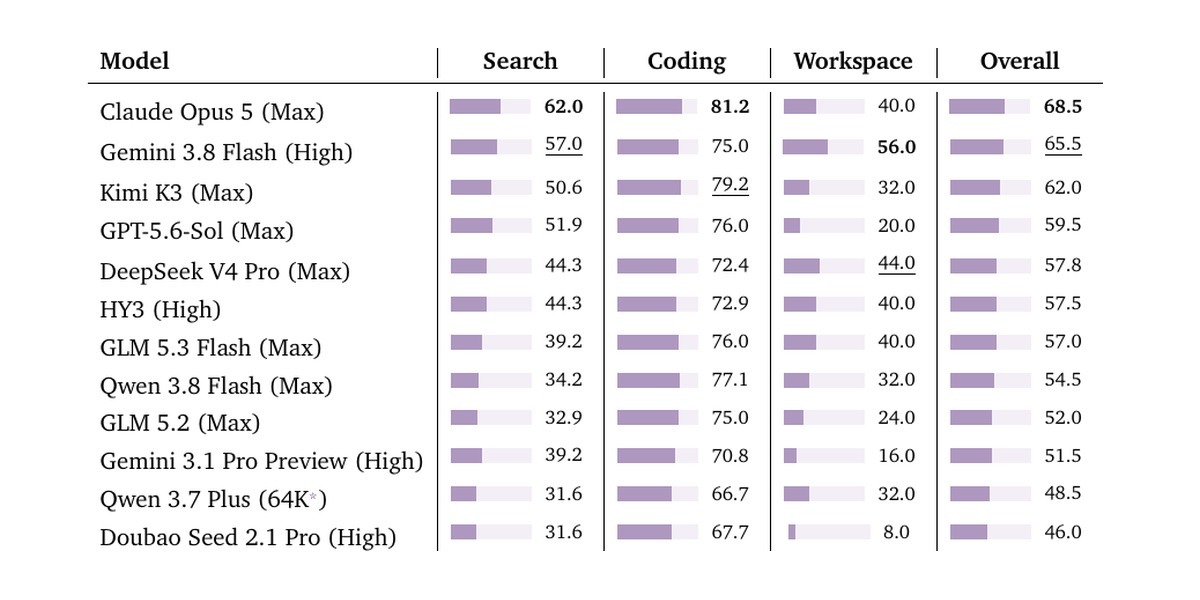
Chen and colleagues report CompAct-Bench, which scores working-context compaction by its downstream effect: take trajectories the executor solves in three pre-compaction screening runs, compress the history to a controlled 10% character-level retention target, and let the same executor continue. Across twelve frontier models as compactors on 200 instances spanning BrowseComp, SWE-bench and an internal CompanyBench, average post-compaction accuracy falls to 56.7%, and the best compactor, Claude Opus 5, reaches 68.5% overall, with coding at 81.2% far above workspace tasks at 40.0%. Failure analysis separates omissions, which cause repeated work and budget exhaustion, from state distortion, which turns tentative evidence into conclusions and triggers premature termination.
Assessment
This prices the alternative to structured handoffs like yesterday's semantic context handoff: compress a solved trajectory and even the strongest model loses about a third of task completion. Workspace tasks, not coding, are where compaction hurts most, which is where long-horizon personal agents actually live.
Submitted November 19; appeared in the November 20 listing.