
AI agent cooperation From the report of
One malicious delegate, replayed incidents and the cost of compaction
- Authors’ claims
Peer review does not narrow AI analyst disagreement; exemplars do
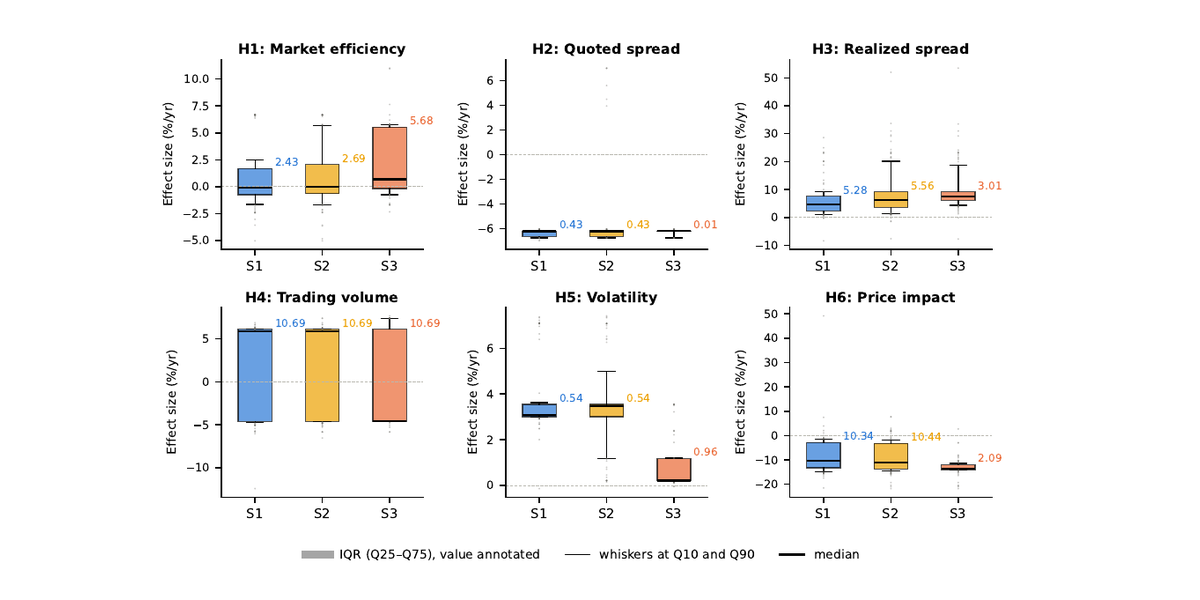
Gao and Xiao report an agentic multiverse analysis of empirical research. In a pilot, 150 autonomous coding agents (100 Sonnet, 50 Opus) analyzing the same NYSE TAQ data disagree through the same defensible methodological choices human analysts make, though over a narrower range. AI peer review leaves their dispersion almost unchanged, while exposure to top-rated exemplar reports collapses it, largely through imitation rather than analysis. The full framework has agents enumerate a published paper's fork space, score each fork against a validity rubric, execute the validated grid and cross-examine one another under strict separation of duties. Applied to ten management-journal replication packages (1,755 specification estimates), it reproduces every paper's original estimates and separates conclusions that hold across all validated specifications from ones sensitive to individual choices the published text does not discuss.
Assessment
The pilot is a clean warning about agent ensembles: having agents review each other does not buy diversity, and showing them strong examples buys conformity, not rigor. Separation of duties, where no agent checks its own work, is the part worth copying into multi-agent research pipelines.
Submitted November 18; appeared in the November 20 listing.